
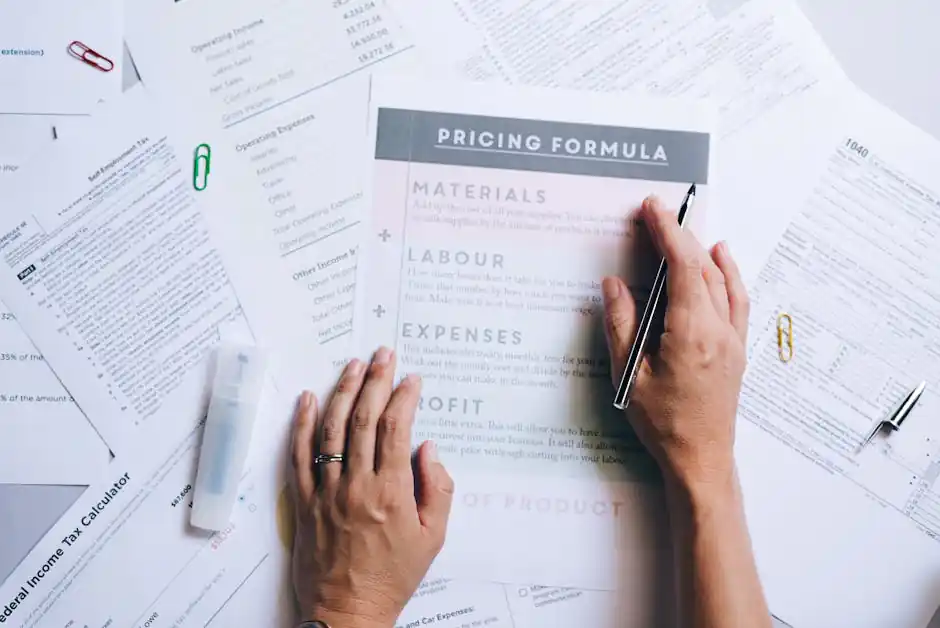
An important aspect of the financial balance of a business is its expenditure. Properly documented expenses incurred for the benefit of the business reduce the tax base and thus the amount of tax payable.
In the course of our work, we often find that entrepreneurs are uncertain about what can and cannot be „tax deductible”. Many are either too cautious and do not even include expenses that could reduce their burden, or, on the contrary, they want to include items as expenses that would certainly be challenged by the NAV during an audit. Our aim in this post is to set the record straight and explain the basic logic and the most important rules of cost accounting.
The key statute: „In the interest of the undertaking”
This is the alpha and omega of cost accounting. Basically, the NAV accepts as expenses any expenditure that we can credibly prove was incurred to generate revenue, to facilitate revenue-generating activity, to maintain operations. And the means of proof is almost invariably a proper invoice in the name and tax number of the company.
So the question we have to ask ourselves with every purchase is: „Is this expenditure necessary for my business to work and generate revenue?” If the answer is clearly yes, there is a good chance that it is an eligible cost.
Cost accounting in practice: for whom and how?
It is important to clarify that the collection of cost accounts is of direct relevance primarily for taxpayers opting for itemised cost accounting. This is the case, for example, for companies subject to corporate tax (TAO).
What about flat-rate taxpayers?
As we have written in previous sections, the beauty of flat-rate taxation is precisely that you don't have to deal with itemised expense accounts. The government automatically recognizes expenses in the form of a predetermined expense ratio (e.g. 40%). Nevertheless, we strongly recommend that flat taxpayers collect their expense reports for two reasons:
Because of VAT: If the contractor is VAT-registered, an invoice in his name is essential to deduct VAT on his purchases. The VAT deduction is independent of the method of cost accounting!
Control and planning: in the light of the year-end expenditure, it can be reviewed whether flat-rate taxation is still the most appropriate form of taxation in the future, or whether it might be better to switch to itemised cost accounting.
Typical eligible costs from A to Z
Let's look at some specific examples of the most common costs that are typically not problematic, provided that the expenditure was incurred in the interest of the business:
Office rent and overheads: rent for the office or workshop and its maintenance costs (electricity, water, heating, internet).
Marketing and advertising costs: online advertising (Google, Facebook), flyers, business cards, website development and maintenance.
IT and telecommunications costs: computer used for work, software (e.g. Microsoft Office, Adobe), mobile phone subscription.
Purchases of materials and goods: the value of the raw materials needed to produce a product or the value of goods purchased for resale.
Education, training: fees for courses and conferences that develop professional knowledge related to entrepreneurship.
Accounting, legal fees: fees for accountant, lawyer, tax adviser.
Bank charges: the fee for managing the entrepreneur's bank account.
Travel expenses: costs related to official business travel (fuel, toll sticker, parking), but there are strict rules on how to account for these.
The „grey zone”: costs to be careful with
There are expenses that straddle the line between personal and business life. The NAV is also more careful with these.
Representation costs: entertainment of business partners. These are limited and subject to certain tax charges.
Clothing: A uniform or work clothes are typically deductible, but a „smart suit for an important meeting” is not. General clothing is considered a private expense.
Home office costs: if the business is based in your own home, only a proportionate share of the overheads for the area used by the business can be charged, which is difficult to substantiate precisely.
Conscious cost planning and proper cost accounting is a key tool for tax optimisation. Our main advice is to ask for invoices for all expenses in the name of your business and to send these receipts to us, your accountant, on a regular basis.
We can help you decide whether the item is legally deductible and make sure everything is in order in your accounts. Working together will ensure that your business takes advantage of all legal opportunities to reduce your burdens, while staying on the straight and narrow all the way.